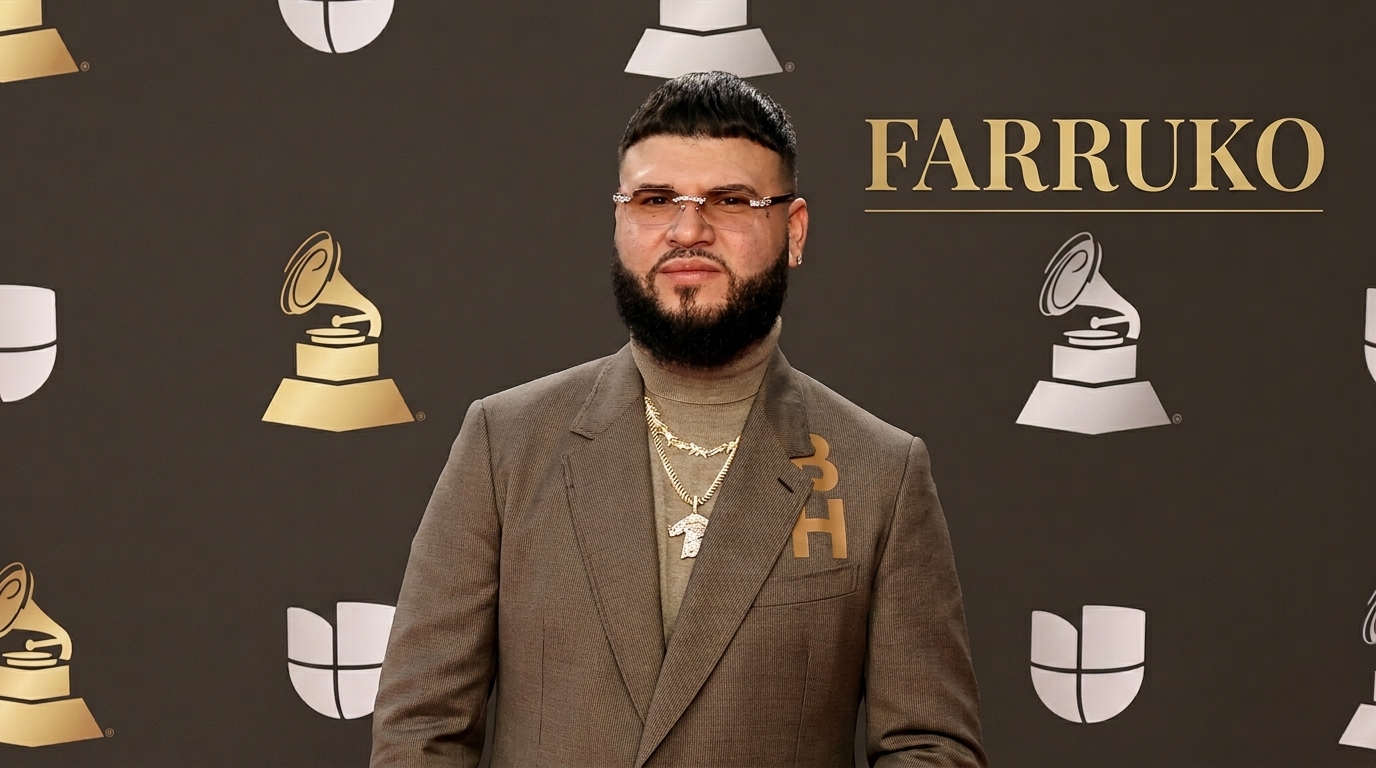
When I think of Farruko, I do not think only of the singer who made the world dance with “Pepas”. I think of Carlos Efrén Reyes Rosado, the man born in Bayamón, Puerto Rico, on May 2, 1991, who began making his way in urban music at a very young age. Over the years, his name became one of reggaeton's most important, but his personal story ultimately became far more interesting than any list of hits.
Farruko has lived through practically every stage an urban artist can experience. He has known difficult beginnings, sudden fame, major stages, international collaborations, money, excess, and also moments when he had to stop and ask himself where he was taking his life. That is why, when you learn a little more about his story, it is difficult to see only the image of the reggaeton singer.
Farruko's beginnings in Puerto Rico
Farruko took an interest in music very young and began becoming known in Puerto Rico while still a teenager. His first steps were linked to the urban scene and internet platforms, at a time when many artists used social networks and music websites to share their songs and find an audience.
His first studio album, El Talento del Bloque, came out in 2010 and quickly helped place his name among urban music's new talents. The album title reflected precisely the image with which he began his career: a young man from humble beginnings who wanted to prove he had enough talent to earn a place among the greats.
From there came new projects, collaborations, and a musical transformation that would become one of his career's most important qualities. Farruko never stayed completely confined to one style. He moved through reggaeton, Latin trap, dancehall, urban pop, and electronic sounds, showing an interest in experimentation and reinvention.
Farruko's musical career and major hits
Over the years, Farruko built a fairly extensive discography. Albums such as The Most Powerful Rookie, Farruko Presenta: Los Menores, Visionary, TrapXFicante, Gangalee and La 167 revealed different stages of his evolution as an artist.
One quality I remember most about Farruko is his ability to understand changes in urban music. While other artists might choose to stay within the same formula, he seemed constantly to be searching for new sounds and collaborations.
Throughout his career, he worked with some of Latin and urban music's most important names. His collaborations with artists such as Daddy Yankee, Bad Bunny, J Balvin, Ozuna, Wisin & Yandel, and many others helped establish his international presence.
But no song would change his career the way “Pepas” did.
Farruko and the “Pepas” phenomenon
“Pepas” became one of Farruko's biggest hits and a song recognized far beyond reggaeton's usual audience. Its combination of urban music and electronic sounds made it an anthem at parties, concerts, and major events.
The song brought Farruko to an even greater level of popularity. It was hard to go to a party or festival, or even listen to commercial music, without encountering it. For many people, Farruko became forever associated with that song.
Yet while “Pepas” grew internationally, Farruko was undergoing a personal transformation that would surprise much of the public.
Farruko's spiritual transformation
One of the most important chapters of Farruko's life began when he started speaking publicly about his relationship with God and how his understanding of life was changing.
In 2022, during a performance in Miami, he was at the center of one of his career's most-discussed moments. In the middle of the concert, he spoke about his spiritual transformation and expressed regret over some things he had previously promoted through his music.
For me, this period is particularly important because it was not simply a change of image. Farruko began speaking about issues that previously had barely been part of his public persona: his family, children, mistakes, ego, excess, and the need to find a more meaningful life.
The change surprised many because it seemed difficult to imagine the same artist who had created one of the biggest party anthems now speaking about repentance and spirituality. Yet Farruko has insisted that the process was real and represented a turning point in his life.
Farruko as a father and his relationship with his children
When people talk about Farruko, they seldom explore a side that became enormously important to him: fatherhood.
In recent years, he has spoken about his children and how much he learned to appreciate family time. Professional success can give someone money, recognition, and opportunities, but it can also make them miss moments impossible to recover later.
Farruko has publicly acknowledged that during some periods of his career he was too focused on work, and that affected the time he could share with his children. With his personal transformation, family began occupying a much more important place among his priorities.
In recent interviews, he has said he is the father of seven children and has spoken proudly of one child's interest in music. That part of his life reveals a much calmer, more family-oriented version of the artist who normally appears onstage.
Farruko's personal life away from the stage
Some details about Farruko help us better understand who he is when he is not facing thousands of people.
In interviews, he has spoken about his daily life, children, family, and even his dog Canelo. They are small details, but that is precisely what makes them interesting.
When someone spends so many years being seen as a celebrity, those simple things can reveal far more than an interview about awards or songs.
Farruko has also spoken about how fame can feed the ego and create a constant search for greater success. After experiencing a period of enormous popularity, he began questioning what he was really trying to achieve and what price he was paying to maintain that pace of life.
Farruko and his relationship with Puerto Rico
Despite achieving an international career, Farruko has never stopped talking about his Puerto Rican roots. Puerto Rico is an essential part of his artistic and personal identity.
His story is also linked to a generation of urban artists who helped turn Puerto Rican music into an international phenomenon. From reggaeton's beginnings to urban music's worldwide explosion, Farruko has been an important part of that evolution.
That connection to his roots continues appearing in his music and most recent projects, even when he explores other Caribbean rhythms and cultures.
Farruko's musical evolution
One thing that strikes me most about Farruko is that he has never seemed afraid to change.
After La 167, he began presenting music much more connected to his new personal and spiritual chapter. One project that marked this evolution was Cvrbon Vrmor, where he continued exploring different sounds and messages.
That does not mean Farruko erased his past. Rather, he seems to have learned to live with all the stages he has experienced. The artist who sang about partying and excess remains part of his story, but now there is a version of him who views those experiences from a different perspective.
In 2026, Farruko continued showing an interest in experimenting and returning to sounds connected to Caribbean roots. His embrace of plena and Panamanian music shows his career is still moving and he has no intention of repeating himself.
What Farruko truly represents
For me, focusing only on “Pepas” when talking about Farruko would mean knowing just a small part of his story.
Behind that success is a young Puerto Rican who began by seeking an opportunity, an artist who became an international figure, a man who experienced the excesses of fame, and also someone who reached a point where he decided to rethink many things.
His story has contradictions, and that is precisely what makes it interesting. Farruko has not tried to hide that he has made mistakes. He has spoken about them, acknowledged changes in his thinking, and publicly shown a much more vulnerable part of himself.
Farruko today: a new chapter of his life
Today's Farruko is far removed from the young man who simply wanted to prove he could conquer the urban scene. After so many years in his career, he seems far more interested in his family, spirituality, roots, and the meaning he wants to give his life.
His transformation does not mean he has stopped being an artist. On the contrary, he keeps recording music, collaborating, and exploring new genres. The difference is that his music now comes from a completely different personal experience.
And perhaps that is what I like most about his story. Farruko shows that someone can reach the very top and still realize they need to change. They can acknowledge mistakes, rethink priorities, and begin another chapter without erasing everything they lived through before.
Farruko is much more than a reggaeton singer. He is the result of years of struggle, success, excess, family, mistakes, faith, and transformation. His story is still being written, but probably one of its most interesting parts no longer concerns how many awards he can win or how many songs he can place on the charts.
It concerns the man who decided to discover who he wanted to be when the stage lights were no longer enough.